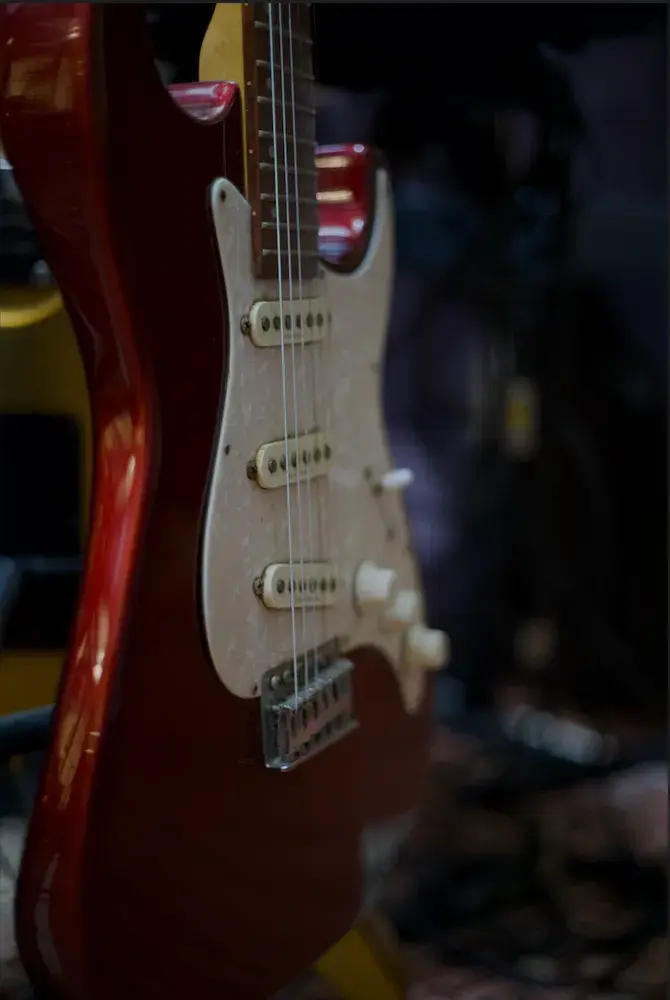
Instruments
Guitar & Ukulele
Music is a language. The guitar is a medium. We teach music.
Learn acoustic, electric, bass or ukulele with real songs, proper technique, and the confidence to jam with others. We tailor our teaching to you, whether you're a beginner, intermediate, advanced, or a college-prep / portfolio student.
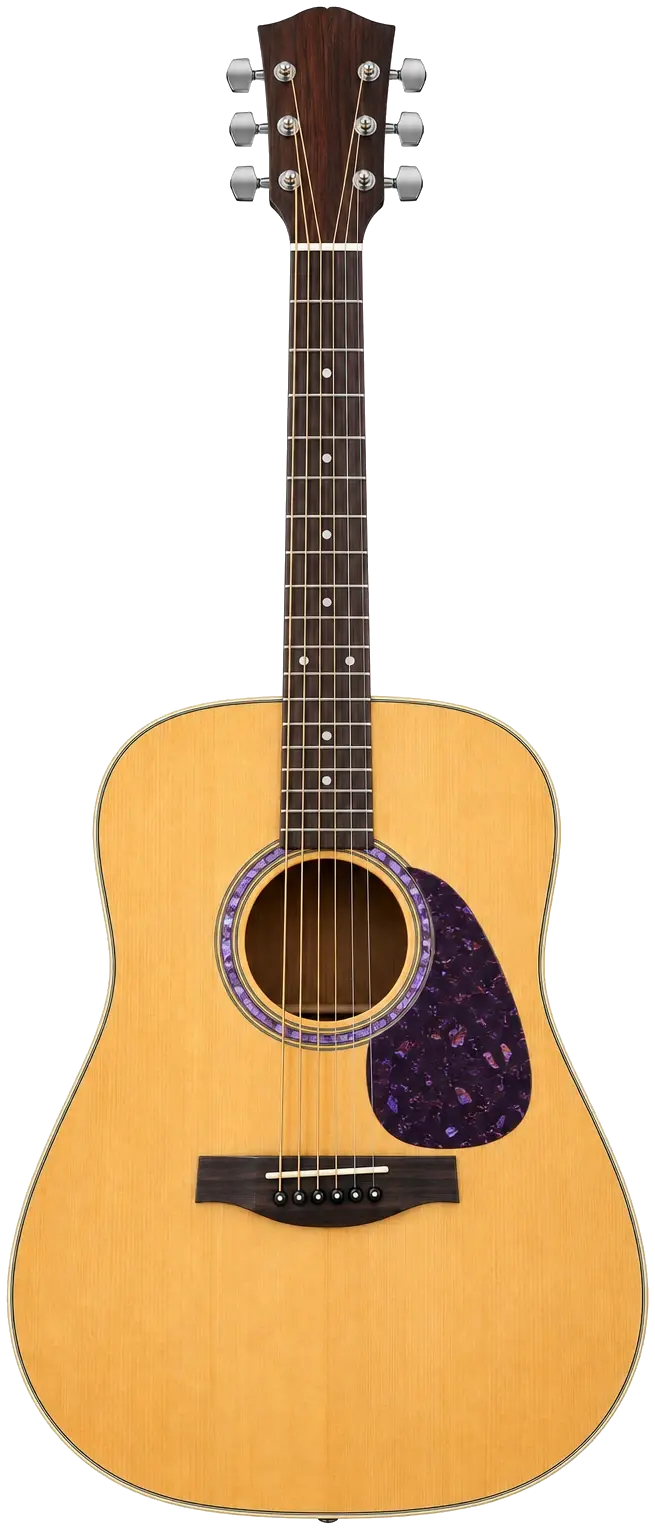
Acoustic Guitar
Build strong rhythm, strumming and fingerstyle technique through real songs. Learn chord vocabulary, timing and accompaniment skills for solo and group playing.
Learning Roadmap
From your first chord to stage-ready performance, at a pace that fits you.
The usual route · Acoustic
Beginner
First chord shapes, a steady strum and your first full song.
Elementary
Quicker chord changes, more strumming patterns and your first fingerpicking.
Intermediate
Harder chord shapes, fingerpicked songs and playing along with a band.
Advanced
Your own style, making up parts as you play, and stage-ready songs.
What playing does for your brain
Brain benefitsMusicians who started young have stronger links between the two halves of the brain.
In a study of 36 trained musicians, those who began before age 7 had stronger connections between the brain's left and right halves, and the stronger links went with better timing between the two hands. The study looked at musical training in general. On guitar, ukulele and bass, each hand does a different job from the first lesson.
Source: Steele, Bailey, Zatorre and Penhune (2013), Journal of Neuroscience.
Your brain tracks timing best in low notes.
Listeners in a brain study noticed timing slips more easily in low notes than in high ones. That may be why bands build their beat around the bass.
Source: Hove, Marie, Bruce and Trainor (2014), PNAS.
FAQ
Questions you’d ask if we were sitting across from you.
Yes.Guitarisoneofthemostbeginner-friendlyinstrumentsforbuildingquickwinsandsustainedmotivation.
Most students start comfortably between ages 7–9, once finger strength and hand span allow for basic chord shapes.
Acoustic is often recommended first for fundamentals, though electric is valid too, since motivation matters more than the “correct” order.
Guitar has an easier entry point but a steeper technical ceiling for advanced repertoire; piano has a steeper initial curve but a more logical layout.
Can’t find what you’re looking for? Reach out and contact us.
This Course Pairs Well With…
Round out your sound with a complementary instrument or voice



History of the Guitar
The guitar's roots stretch back over 4,000 years to early stringed instruments in Mesopotamia and Egypt, but the instrument as we recognize it today took shape in Spain during the 15th and 16th centuries, evolving from the vihuela and the four-course guitar of the Renaissance. By the 1800s, luthiers like Antonio de Torres had standardized the modern classical guitar's size and bracing, giving it the resonant, balanced voice still prized today.
Songs to learn on acoustic guitar
Just a voice and an acoustic guitar. A good first song.