Instruments
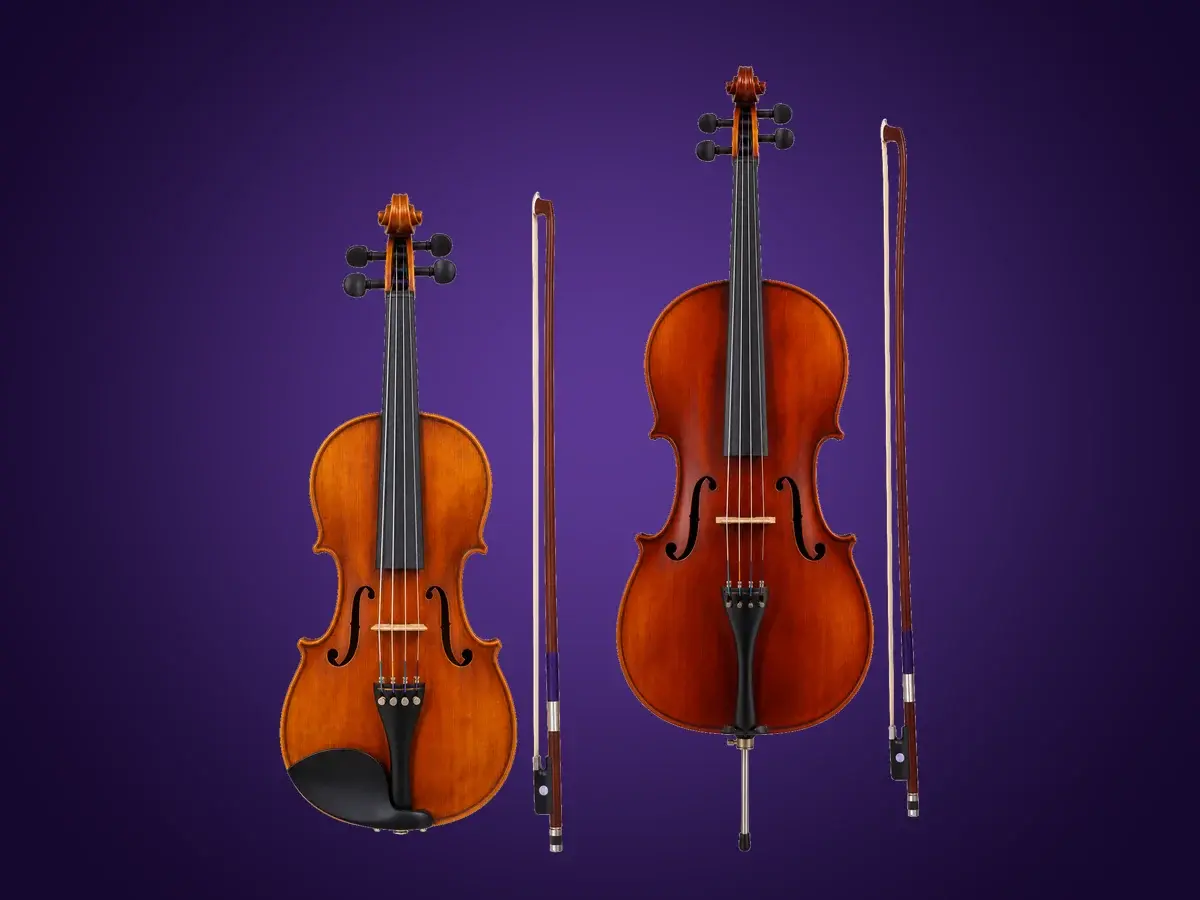
Violin & Cello
Music is a language. The violin is a medium. We teach music.
Develop proper technique, expressive tone and the confidence to perform classical and contemporary string music. We tailor our teaching to you, whether you're a beginner, intermediate, advanced, or a college-prep / portfolio student.
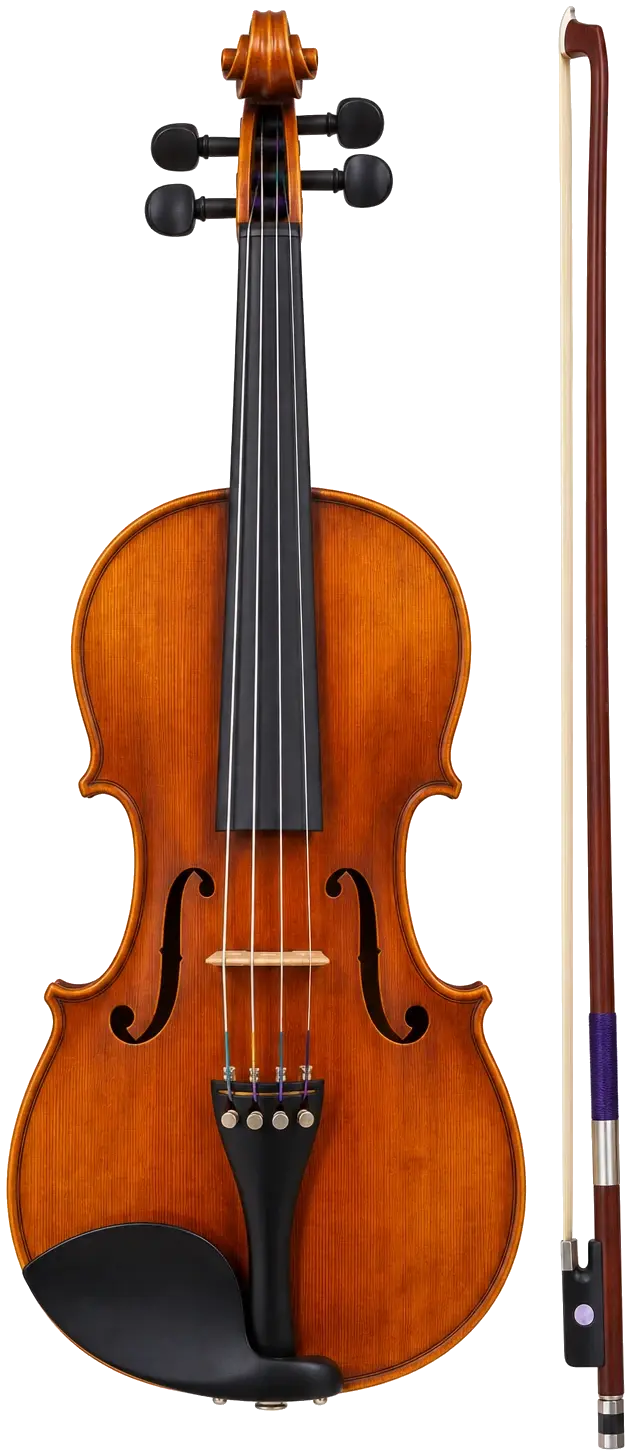
Western Violin
Develop strong posture, bow control and intonation through structured string training. Explore classical and contemporary repertoire while building reading skills, ear training and ensemble confidence.
Learning Roadmap
From your first chord to stage-ready performance, at a pace that fits you.
The usual route · Western Violin
Beginner
Holding the violin and bow, playing in tune and your first recognizable piece.
Elementary
A clean tone, more notes and bow strokes, and your first small performance.
Intermediate
Moving your hand up the neck for higher notes, new bow strokes and longer pieces.
Advanced
A full, rich tone, concert pieces and the highest notes on the violin.
What playing violin does for your brain
Brain benefitsString players' brains map their note-finding fingers more fully.
Brain scans showed that in string players, the area that senses touch from the left-hand fingers, the ones that find each note, was larger than in people who don't play. The difference was biggest in players who started young.
Source: Elbert, Pantev, Wienbruch, Rockstroh and Taub (1995), Science.
Violinists' brains respond to violin playing in their own way.
In a small study, professional violinists watched violin and clarinet performances. Their brains responded in a distinct way to violin playing only, a sign that years of practice tune the brain to your own instrument.
Source: Proverbio and colleagues (2014), Scientific Reports.
FAQ
Questions you’d ask if we were sitting across from you.
Forsteadyprogress,yes.Consistentpracticeoutsideclassisimportant.Ifyoudon'talreadyownaViolinand/orCello,we'llhelpyouchooseonewithinyourbudget,andinsomecaseswesharerentalguidanceaswell.
Not at all. We have dedicated adult-friendly batches (both online and in-institute), and the teaching style, pace and song choices are adapted for adult learners.
Both. Our method balances reading, ear training and technique so you build strong fundamentals while still learning songs you enjoy from day one.
No. Exams are optional. If you want to pursue grade exams, we align your training accordingly. If not, we use internal level checks and performances as your milestones.
That's exactly why we offer a Free Demo + counselling call. We assess your current level, goals and schedule, and then recommend the right Regular / Premium plan and billing cycle. Full pricing details are shared during that call.
Can’t find what you’re looking for? Reach out and contact us.
This Course Pairs Well With…
Round out your sound with a complementary instrument or voice
History of the Violin & Cello
The violin family emerged in 16th-century Italy, in the workshops of Cremona luthiers like Andrea Amati, and reached its peak a century later under Antonio Stradivari and Giuseppe Guarneri, whose instruments are still considered unmatched today. The cello developed alongside the violin as its bass-register sibling, tuned an octave and a fifth lower, and by the 18th century both had become the backbone of the string sections that define orchestral and chamber music.
Pieces to learn on violin
Solo violin carrying a whole film score. A good first piece.