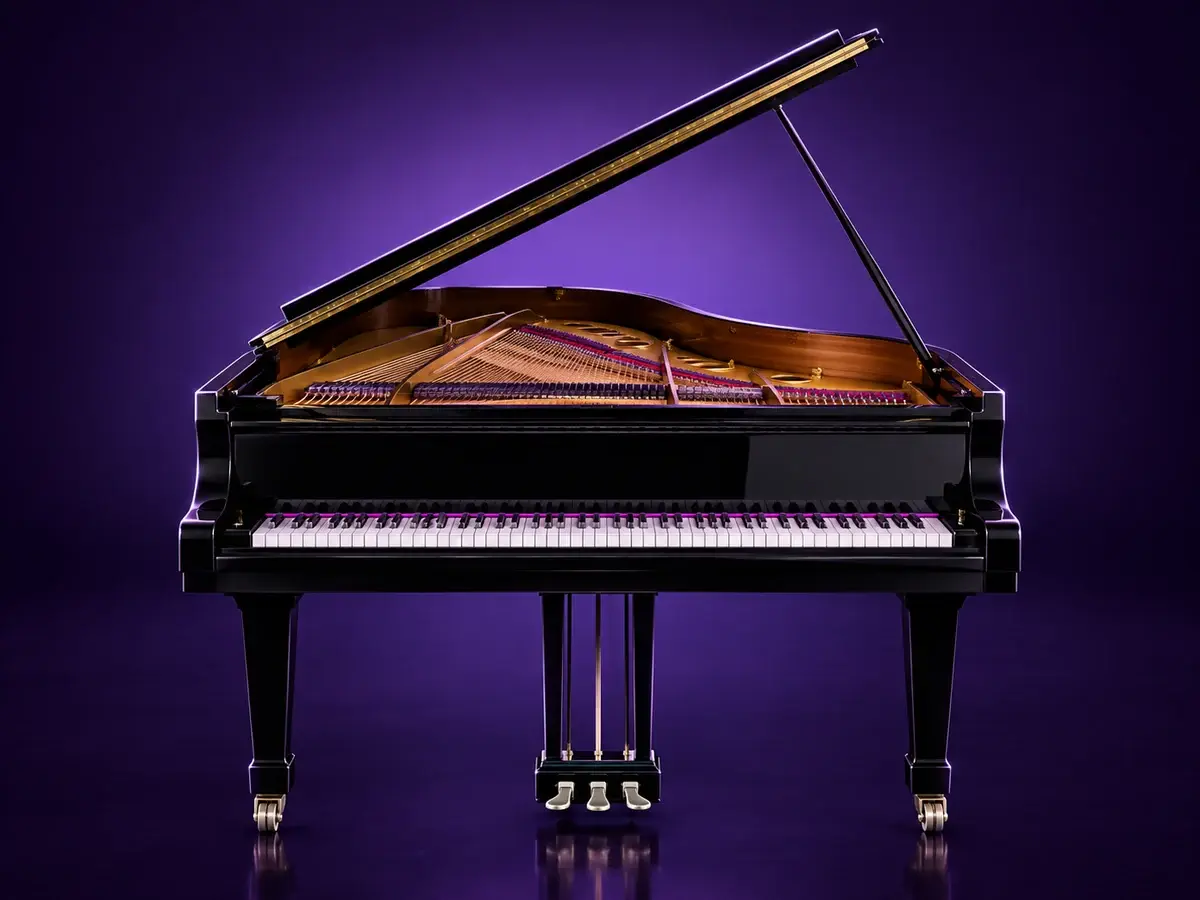
Instruments
Piano & Keyboard
Music is a language. The piano is a medium. We teach music.
Transform from complete beginner to confident performer with structured lessons, expert guidance, and real performance opportunities. We tailor our teaching to you, whether you're a beginner, intermediate, advanced, or a college-prep / portfolio student.
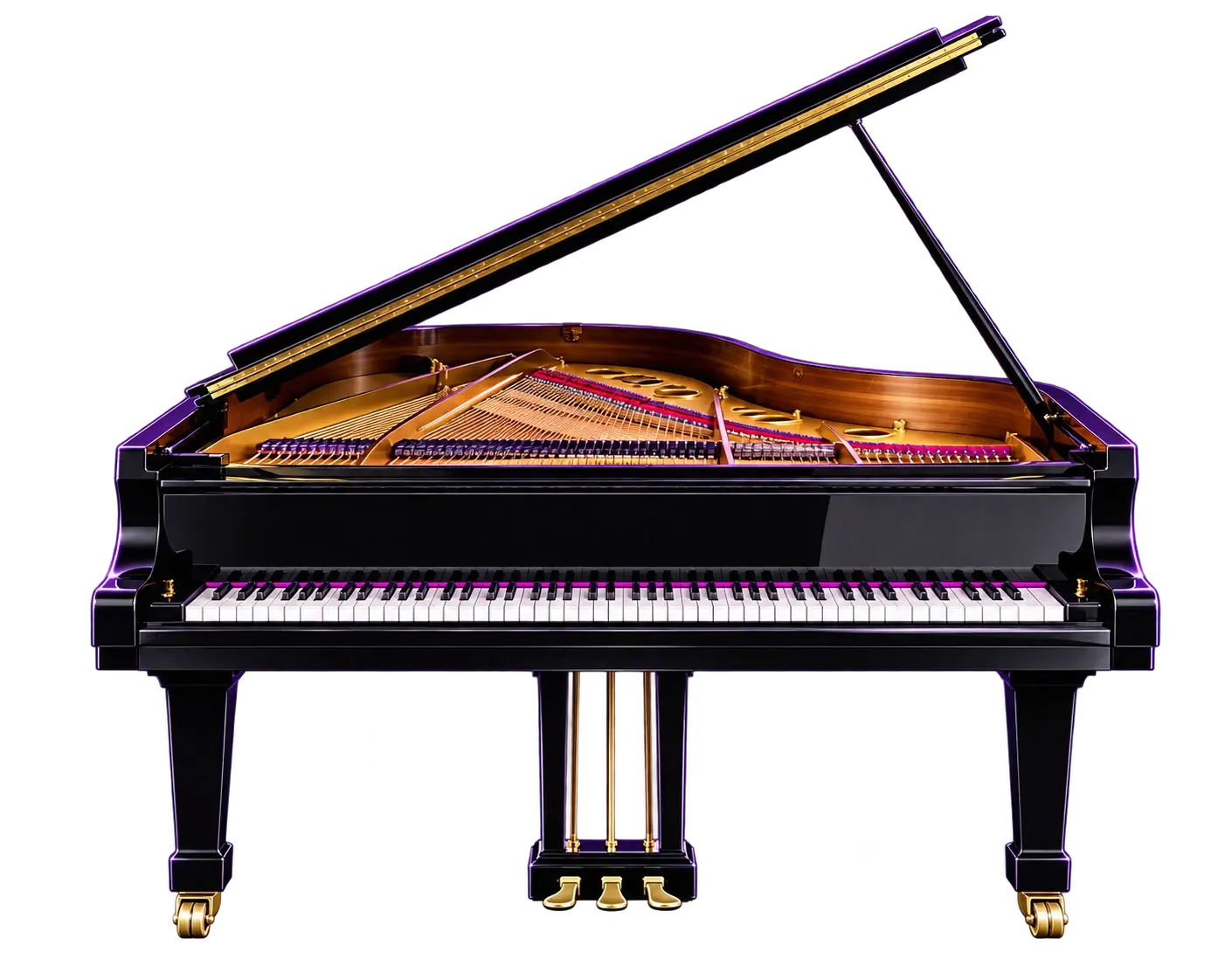
Piano
Develop strong technique, music reading and expressive playing through structured, song-based learning. Explore classical and contemporary repertoire while building confidence for performances, exams and creative musicianship.
Learning Roadmap
From your first chord to stage-ready performance, at a pace that fits you.
The usual route · Piano
Beginner
Finding the notes, reading simple music, and your first songs and small performance.
Elementary
Each hand playing its own part, first scales, and playing soft and loud.
Intermediate
Faster pieces, scales in more keys and making up your own parts.
Advanced
Reading new music at first sight, harder pieces across styles, and performance-ready playing.
What playing does for your brain
Brain benefitsMusicians who started young have stronger links between the two halves of the brain.
In a study of 36 trained musicians, those who began before age 7 had stronger connections between the brain's left and right halves, and the stronger links went with better timing between the two hands. The study looked at musical training in general, and many of the early starters played piano.
Source: Steele, Bailey, Zatorre and Penhune (2013), Journal of Neuroscience.
Thirty minutes at the piano lowered stress.
College students spent 30 minutes playing piano, modeling clay or doing calligraphy. All three lowered cortisol, a stress hormone, and playing piano brought the biggest drop in anxiety.
Source: Toyoshima, Fukui and Kuda (2011), International Journal of Music Education.
FAQ
Questions you’d ask if we were sitting across from you.
Forsteadyprogress,yes.Consistentpracticeoutsideclassisimportant.Ifyoudon'talreadyownaPianoand/orKeyboard,we'llhelpyouchooseonewithinyourbudget,andinsomecaseswesharerentalguidanceaswell.
Not at all. We have dedicated adult-friendly batches (both online and in-institute), and the teaching style, pace and song choices are adapted for adult learners.
Both. Our method balances reading, ear training and technique so you build strong fundamentals while still learning songs you enjoy from day one.
No. Exams are optional. If you want to pursue grade exams, we align your training accordingly. If not, we use internal level checks and performances as your milestones.
That's exactly why we offer a Free Demo + counselling call. We assess your current level, goals and schedule, and then recommend the right Regular / Premium plan and billing cycle. Full pricing details are shared during that call.
Can’t find what you’re looking for? Reach out and contact us.
This Course Pairs Well With…
Round out your sound with a complementary instrument or voice
History of the Piano
The piano was invented around 1700 by Bartolomeo Cristofori in Florence, who built it as a harpsichord that could play both loud and soft. Its original Italian name, gravicembalo col piano e forte, is where the instrument's name comes from. Its hammer mechanism let players control volume and expression in a way earlier keyboards couldn't, and by the 1800s makers like Steinway had refined the modern grand piano's frame, strings and action into the instrument we know today.
Pieces to learn on piano
One of the most learned piano pieces of the streaming era. A good first piece.